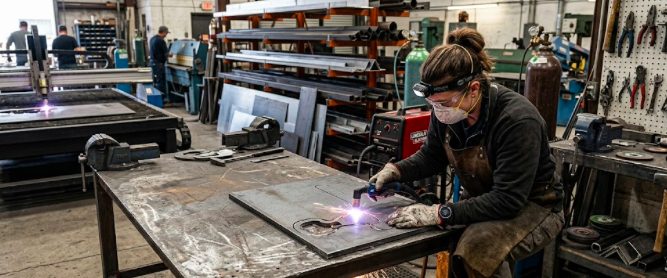
Metal fabrication is a critical manufacturing process used to create everything from structural steel components and industrial machinery to decorative railings, gates, staircases, and custom architectural features. Behind every finished metal product is a series of specialized fabrication techniques that shape, cut, join, and finish raw materials into durable, functional products. Understanding these methods helps homeowners, business owners, contractors, and designers make better decisions when planning projects that require custom metalwork. Although every fabrication project is unique, most rely on a combination of well-established techniques that have been refined over many years. Learning about common metal fabrication techniques from 83MetalCraft LLC provides valuable insight into how high-quality metal products are produced.
What Is Metal Fabrication?
Metal fabrication is the process of transforming raw metal materials into finished products through a variety of manufacturing techniques. Instead of producing raw metal itself, fabrication focuses on modifying existing sheets, plates, bars, pipes, and structural sections to create usable components. Every project begins with planning, measurements, and engineering before fabrication work starts. The goal is to produce parts that meet precise specifications while maintaining strength, durability, and visual appeal. Accurate fabrication is essential for both structural performance and product quality.
Modern fabrication serves many industries, including construction, transportation, manufacturing, agriculture, energy, and residential improvement. Fabricated metal products can range from simple brackets and frames to complex staircases, industrial equipment, and decorative architectural features. Skilled fabricators combine technical knowledge with specialized machinery to produce components that fit together accurately. Every stage of fabrication contributes to the overall quality of the finished product. Precision and consistency remain essential throughout the process.
How Does Metal Cutting Work?
Cutting is one of the most fundamental metal fabrication techniques because nearly every project begins by reducing raw materials to the required size and shape. Fabricators use different cutting methods depending on the material type, thickness, accuracy requirements, and desired edge quality. Mechanical saws, shears, plasma cutters, laser cutting systems, and waterjet machines each offer advantages for different applications. Selecting the right cutting method helps reduce waste while improving production efficiency. Accurate cutting provides the foundation for every successful fabrication project.
Modern cutting technology has significantly improved fabrication precision. Laser cutting produces extremely clean edges with tight tolerances, making it ideal for decorative panels and detailed components. Plasma cutting is often selected for thicker steel because it offers speed and efficiency for structural applications. Waterjet cutting uses high-pressure water combined with abrasive materials to cut metal without generating heat, making it suitable for temperature-sensitive projects. Each cutting method serves a valuable role depending on the project’s specific requirements.
Why Is Metal Bending Important?
Metal bending allows flat sheets or structural components to be formed into three-dimensional shapes without removing material. Press brakes and specialized forming equipment apply controlled force to create accurate bends that match engineering specifications. This process is widely used for brackets, frames, enclosures, stair components, handrails, and many structural applications. Proper bending strengthens many fabricated parts while reducing the need for additional welded connections. Precision bending contributes to both structural integrity and efficient production.
The success of the bending process depends on several factors, including material thickness, bend radius, metal type, and equipment settings. Excessive force may damage the material, while insufficient pressure can produce inaccurate dimensions. Skilled operators carefully calculate each bend to ensure consistent results throughout the project. Advanced computer-controlled equipment further improves accuracy by minimizing variations between individual parts. Reliable bending supports efficient assembly during later fabrication stages.
How Does Welding Join Metal Components?
Welding is one of the most recognizable metal fabrication techniques because it permanently joins separate metal components into a single structure. During welding, heat is used to melt the edges of adjoining pieces so they fuse together as they cool. Different welding processes are available depending on the material, joint configuration, and performance requirements. Proper welding creates strong, durable connections capable of supporting significant structural loads. High-quality welds are essential for safety and long-term reliability.
Several welding methods are commonly used throughout the fabrication industry. MIG welding is valued for its speed and versatility, making it popular for general fabrication work. TIG welding produces exceptionally clean, precise welds that are often used on stainless steel, aluminum, and decorative metal projects. Stick welding performs well in outdoor environments where wind may interfere with shielding gases. Choosing the correct welding technique ensures the finished product meets both strength and appearance requirements.
What Is Metal Machining?
Machining is a fabrication technique that removes small amounts of material to create highly accurate dimensions and smooth finished surfaces. Lathes, milling machines, drills, and computer-controlled machining centers shape metal parts that require precise tolerances. Unlike cutting, which primarily separates material into larger sections, machining focuses on refining individual components to exact specifications. This process is commonly used for mechanical parts, fastener holes, bearing surfaces, and precision fittings. Accurate machining supports proper assembly and dependable operation.
Computer numerical control, often referred to as CNC machining, has greatly improved manufacturing consistency. CNC equipment follows programmed instructions that produce identical parts with remarkable accuracy. Automated machining reduces human error while increasing production efficiency for both small and large manufacturing runs. Precision machining is especially valuable when components must fit together with very little tolerance. Reliable machining contributes to higher overall product quality.
Why Are Finishing Techniques Important?
Finishing is the final stage of many fabrication projects and plays an important role in both appearance and durability. After fabrication is complete, metal surfaces may be cleaned, polished, sanded, painted, powder coated, galvanized, or treated with protective finishes. These processes improve corrosion resistance while enhancing the product’s overall visual appeal. Surface finishing also removes rough edges, weld discoloration, and fabrication marks that remain after manufacturing. A quality finish completes the fabrication process.
Protective finishes help fabricated products withstand moisture, sunlight, chemicals, and everyday wear. Powder coating creates a durable protective layer available in many colors and textures, while galvanizing protects steel through a zinc coating that resists corrosion. Polishing creates decorative finishes commonly seen on stainless steel architectural products. Selecting the appropriate finish depends on the product’s intended environment and performance requirements. Proper finishing extends product lifespan while reducing future maintenance.
How Do Fabrication Techniques Work Together?
Although each fabrication technique serves a different purpose, most projects rely on several methods working together to produce the finished product. A typical fabrication project may begin with cutting raw materials before bending structural sections into the required shapes. Components are then machined where precision is required, welded into larger assemblies, and finally finished with protective coatings or decorative treatments. Every stage builds upon the accuracy of the previous step. Successful fabrication depends on careful coordination throughout the manufacturing process.
Planning plays an equally important role in ensuring each fabrication technique is performed efficiently. Engineering drawings, material selection, quality inspections, and production scheduling all influence the final outcome. Skilled fabricators evaluate every project individually to determine which combination of fabrication methods provides the best balance of strength, efficiency, appearance, and cost. A coordinated approach minimizes waste while maximizing product quality. Careful planning supports successful fabrication from start to finish.
How Can Understanding Fabrication Techniques Help Property Owners?
Understanding common metal fabrication techniques helps property owners make better decisions when planning custom projects. Knowing how materials are cut, formed, welded, machined, and finished allows clients to better appreciate the craftsmanship involved in producing custom gates, staircases, railings, structural components, and architectural features. This knowledge also improves communication during the design process because expectations become clearer from the beginning. Informed decisions often lead to better project outcomes. Education supports successful collaboration.
An understanding of fabrication methods also helps property owners evaluate long-term value rather than focusing only on the initial price. Quality fabrication techniques contribute to stronger products, improved durability, reduced maintenance, and better overall performance throughout the product’s lifespan. Investing in well-fabricated metal components often provides lasting benefits that extend far beyond installation. Careful craftsmanship remains one of the most important factors in every successful metal fabrication project. High-quality fabrication delivers dependable results for years to come.
Final Thoughts
Metal fabrication combines multiple specialized techniques to transform raw materials into durable, functional, and visually appealing products. Cutting, bending, welding, machining, and finishing each play an essential role in producing high-quality metal components for residential, commercial, and industrial applications. Understanding how these common metal fabrication techniques work together helps property owners appreciate the craftsmanship behind custom metal products while making informed project decisions. Whether creating structural steel, decorative railings, gates, or architectural features, skilled fabrication remains the foundation of reliable and long-lasting metalwork.